It’s a familiar moment in many classrooms.
A student shares something they’ve seen online, confident, certain, and often completely convinced it’s true. Sometimes it’s harmless. Sometimes it’s surprising. Occasionally, it’s concerning.
And increasingly, it raises the same quiet question for teachers:
How do we help students make sense of all this?
Because the challenge isn’t access to information anymore. It’s what students do with it.
At State Library of Queensland this question has been sitting at the centre of our work with schools for some time. Through workshops and conversations with teachers, one thing has become clear:
Students don’t just need more information—they need the skills to understand it.
This is where Fact or Fiction? began.
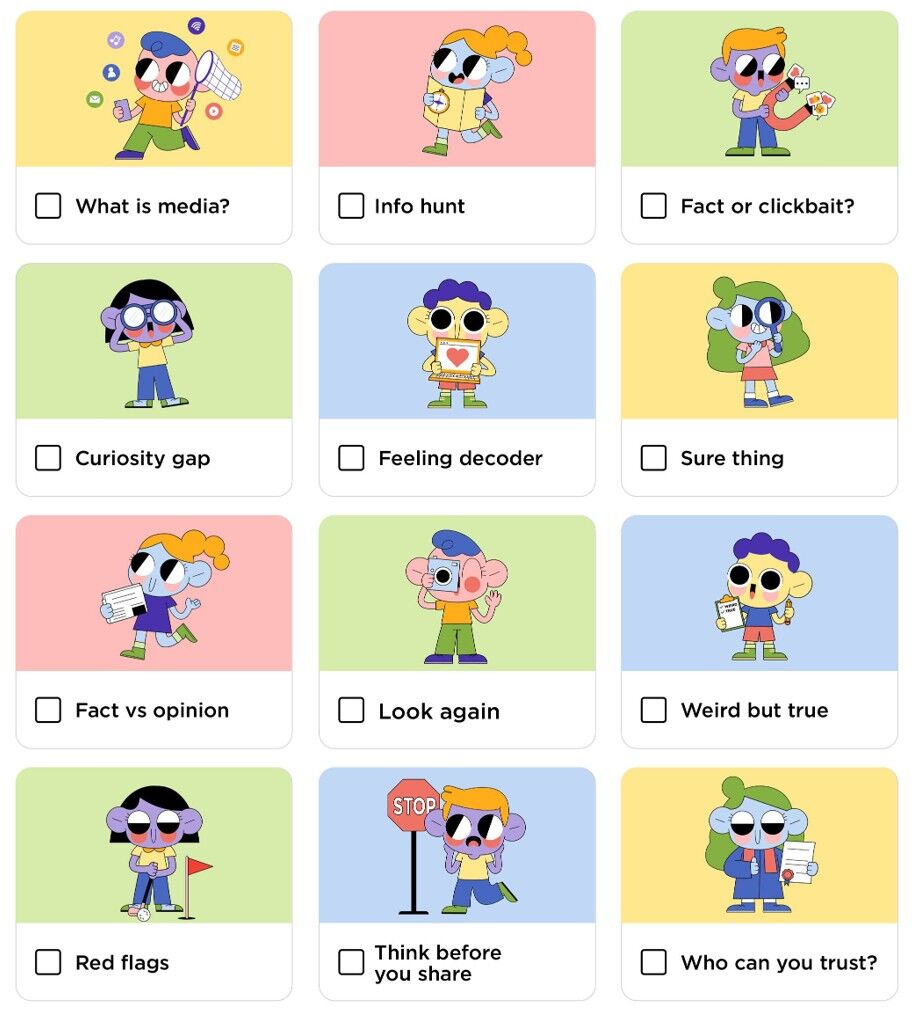
Fact of Fiction? Twelve short, interactive challenges, each focused on building a specific media literacy skill.
Designed for students in Years 4–7, the program brings together a series of short, interactive challenges that help students build the habits of critical thinking they need to navigate today’s media landscape.
Each challenge is deliberately small, just 5 to 10 minutes, but focused.
One skill at a time:
- Recognising clickbait
- Spotting emotive language
- Identifying what makes a source trustworthy
- Deciding whether something should be shared
Individually, these are simple moments of learning. Together, they begin to shift how students engage with the world around them.
What makes these challenges particularly powerful is not just what students learn, but how they learn it.
Rather than approaching media literacy as a single lesson or topic, Fact or Fiction? builds understanding gradually, through repetition, application, and real-world examples.
It is hoped that as students engage with the challenges they will:
- start to notice patterns.
- begin to question what they see.
- pause, reflect, and reconsider.
Over time, these small shifts become habits.
And this is where learning translates into habits that carry into classroom practice.
The skills students are developing, questioning, analysing, comparing sources, are the same skills that underpin learning across English, Media Arts and other subject areas.
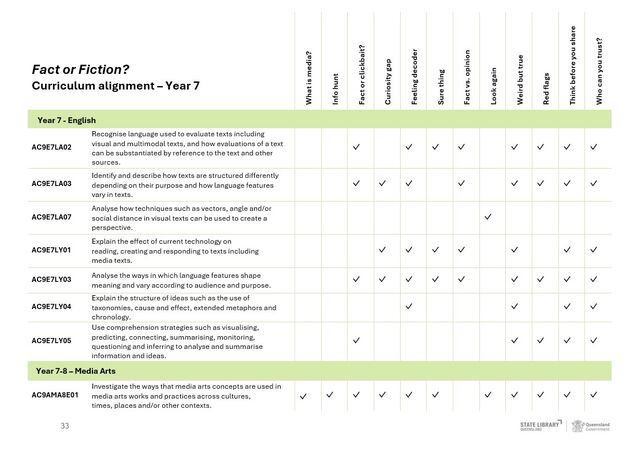
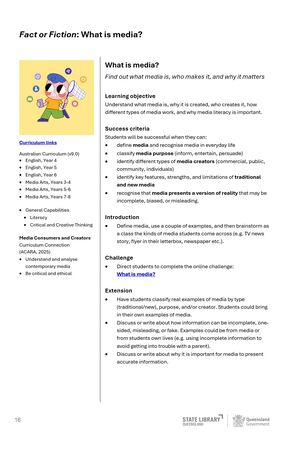
To support teachers in making these connections clear, Fact or Fiction? includes detailed curriculum mapping across Years 4–7.
Fact or Fiction? challenge alignment with ACARA content descriptions (Years 4–7).
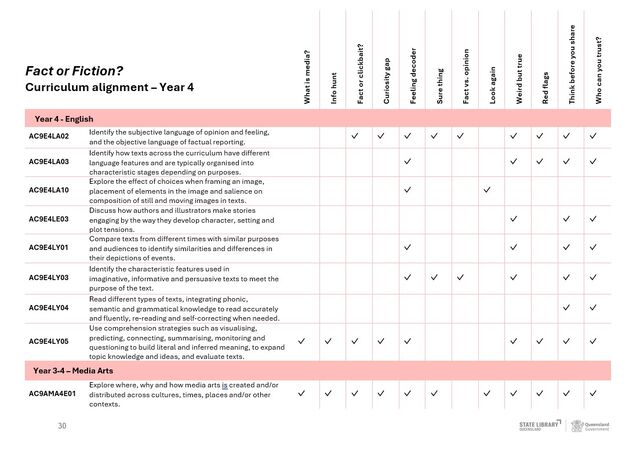
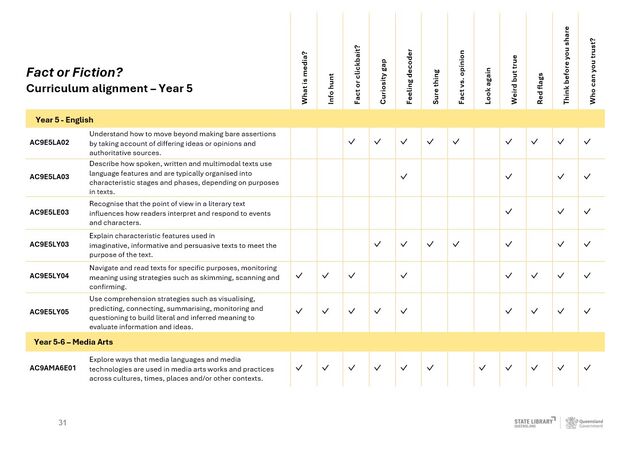
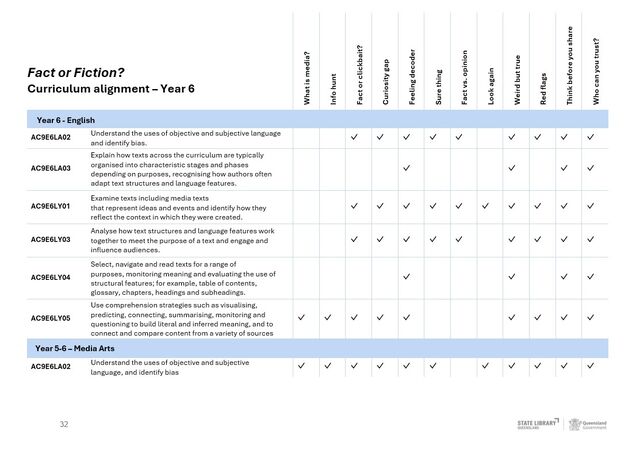
As students move through the program, a different kind of question begins to emerge:
If I’m not sure something is true… where do I go?
This is where libraries come in.
Libraries are not just places where information is stored, but where it is checked, understood, and trusted.
Students are encouraged to see libraries as part of their trusted toolkit: places to check information, people to ask questions, and spaces where curiosity is supported.
Fact or Fiction? has been built with teachers in mind.
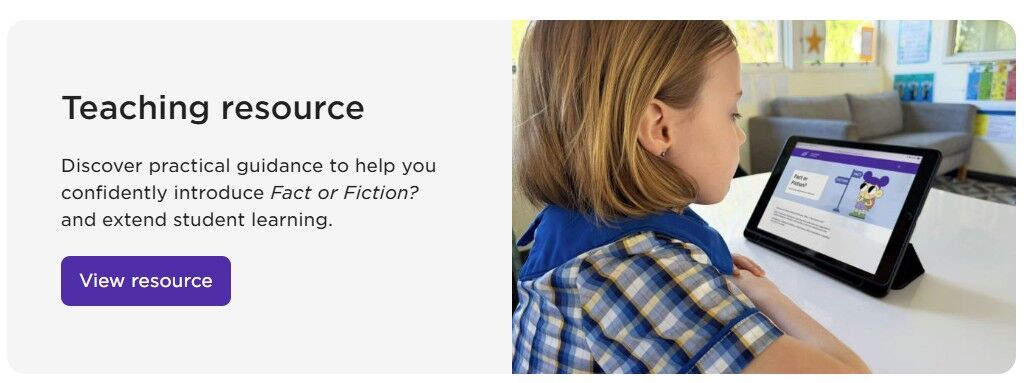
It is ready to use, no logins, no setup, no marking required. Beyond the student-facing challenges, the program is supported by practical teaching resources designed to embed media literacy into classroom learning.
Fact or Fiction? brings the work of the library into the classroom, not as a one-off experience, but as an ongoing support for teaching and learning.
Helping students become more thoughtful, more questioning, and more confident in how they engage with information.
Not just in the classroom, but in the world beyond it.
Explore the resources below to get started:
- Fact or Fiction? student challenges
- Fact or Fiction? teacher notes
If you have questions or would like support using Fact or Fiction? in your classroom, please contact State Library of Queensland’s Schools Engagement team at learning@slq.qld.gov.au
We’re here to support you in bringing media literacy into your classroom.
Add new comment