The Digital collections catalyst is awarded annually to projects that use computational methods, such as machine learning, generative AI, and other tools with State Library’s digital collections and/or collections data, to deliver an innovative and creative digital experience.
The program supports highly creative and experimental ideas that bring together technology with cultural heritage to inspire Queenslanders through State Library collections.
The successful recipient receives a stipend of $15,000 and premium access to State Library’s extensive collections and library staff expertise.
Digital collections Catalyst - State Library of Queensland
Anna Rowe was awarded the 2025 Digital collection catalyst for her project, 'Wallflowers: reimagining historical interiors'.
Wallflowers: reimagining historical interiors dives into the vibrancy of colour and pattern through digitised historical interior photographs from the John Oxley Library collection. Using generative AI filters, black-and-white images of 19th-century residential interiors will be colourised to bring these spaces to life. Selected wallpaper and textile patterns visible in these photos will be digitally reconstructed in fine detail, and research will reveal their original colourways or those popular in the era.
The project will create an interactive digital experience, presenting these patterns in known, conjectural, and modern colourways. Visitors will even be able to save their favourite pattern and colourway to use as custom computer ‘wallpaper,’ bridging historical design with personal creativity.
Watch this video to discover more about Anna's project, along with the other 2025 Queensland Memory Awards fellows.
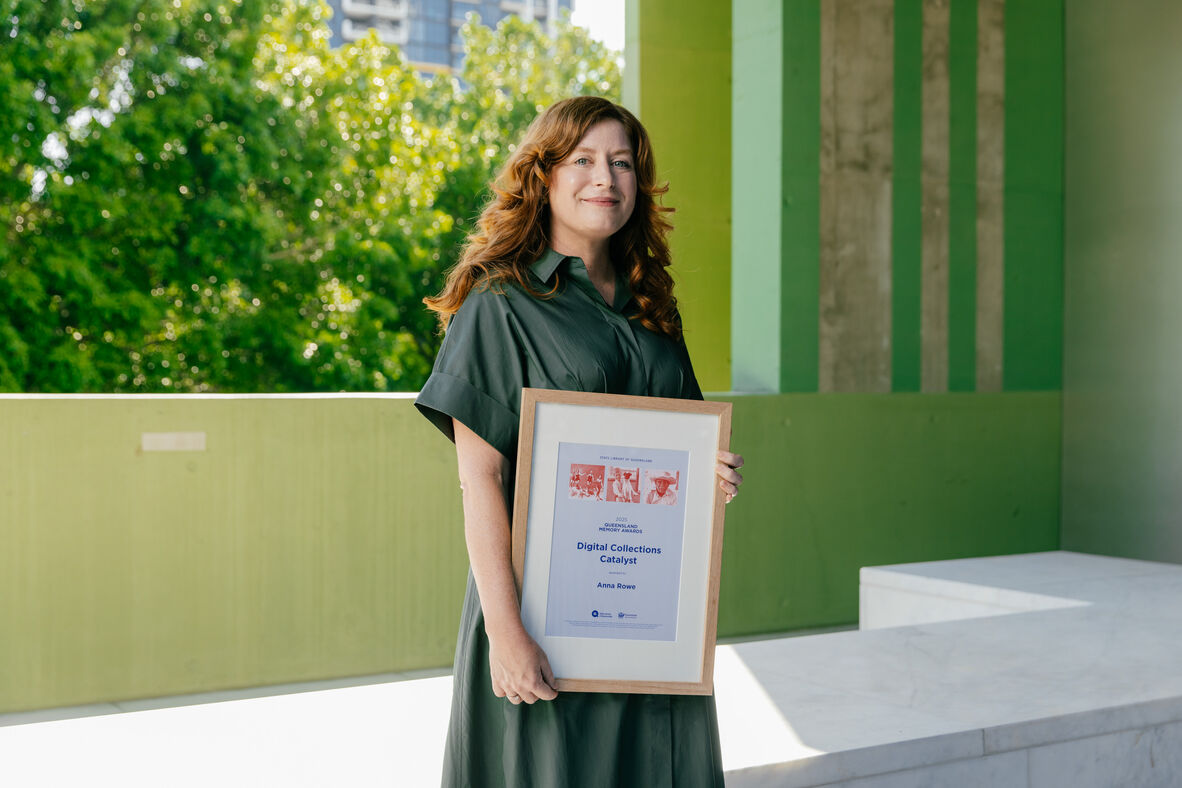
Anna Rowe, 2025 Digital collections catalyst.
Wallflowers will digitally colourise 19th-century interior photos and will recreate wallpaper and textile patterns in detail, with an interactive experience for exploring and saving designs. Read about Anna’s research into Queensland’s interior design history from our collection.
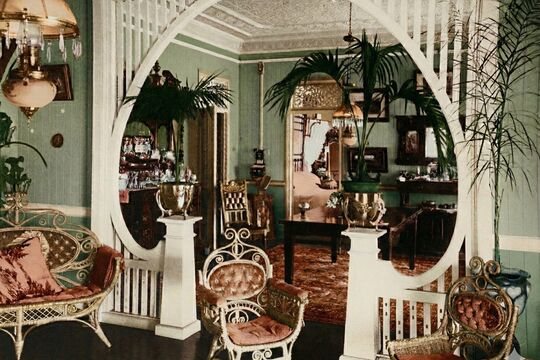
Interior of Mimosa, Hawthorne, ca. 1913. J.W. Fegan. John Oxley Library, State Library of Queensland. Negative number: 62782.

2024 Digital collections catalyst, Evelyn Saunders.
Evelyn Saunders was awarded the 2024 Digital collection catalyst for her project, Min(d)ing the dead.
Min(d)ing the Dead is an online interactive documentary about a renowned “ghost” town that, during Covid, became the largest gold mine in Queensland. Part film, part book and part photo album, it explores what happens to a community when a historic gold mining town, heritage, and ghost-busting tourist destination becomes a born-again mine.
On track to match Ravenswood's past century-and-a-half of gold acquisition in the next fourteen years, mining operations have expanded and a two-kilometre wall now inhibits direct access to the local cemetery. Remains found in previously undiscovered graves near the school have been relocated to the cemetery, a new school has been built, and three one-hundred-year-old masonry chimneys that had been slated for demolition have been carefully removed to an undisclosed location inside the mine’s footprint. This project does not seek to criticise, but, rather, to document the Ravenswood story up to and including 2023/2024.
Min(d)ing the Dead is an interactive project inspired by a fascination with Ravenswood, sparked in 2013 during filming for Breaker Morant: The Retrial, a History Channel documentary. Read more about Evelyn’s research into the town’s history in her blogs.
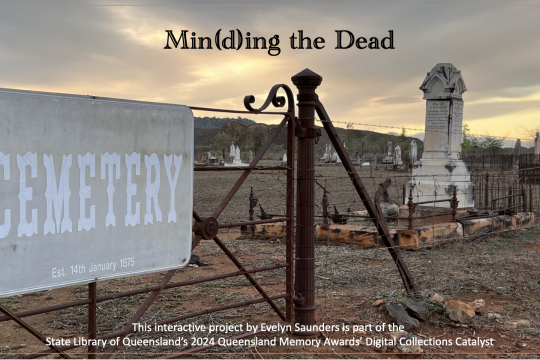
Watch Evelyn discuss Min(d)ing the Dead, her digital project uncovering the layered histories of Ravenswood, Queensland, at our annual Research Reveals event.
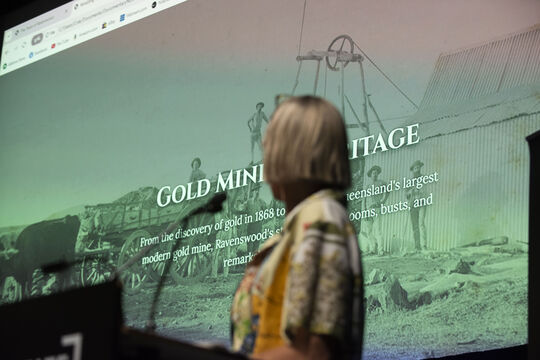
2024 Digital collections catalyst, Evelyn Saunders presenting at the 2025 Research Reveals event on her project - Min(d)ing the dead.
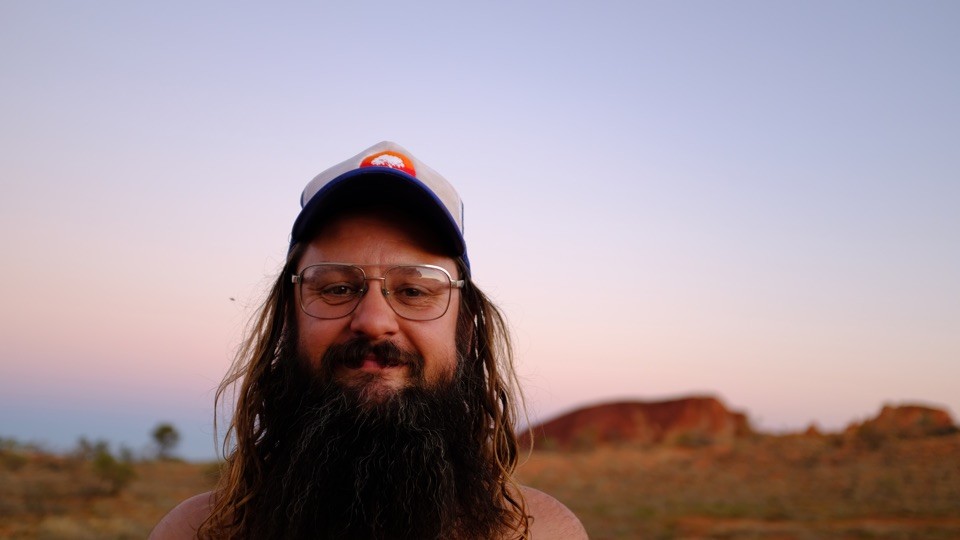
Brett Tweedie is a data visualisation designer with degrees in media and politics, and has been making stuff online since the late 90s.
He was a Google News Lab Fellow (2018), shortlisted for the DX Lab Fellowship at the State Library of NSW (2019) and has produced a range of work for organisations in the GLAM sector, most recently creating We Are What We Steal for the State Library of New South Wales.
He has also worked with the Museum of Applied Arts and Sciences (MAAS), the Museum of Australian Democracy (MoAD), and media organisations such as the ABC, The Australian Financial Review, The Conversation, and The Guardian.
What we search for reveals something about ourselves: about what we don’t know, what we have forgotten, or what we want to know more about. In a similar vein, what a group of people search for reveals something about the group.
This project takes the search terms used in the State Library of Queensland catalogue to create an interactive landscape based on the language, themes, subjects, and terms involved.
This landscape will show where people are searching for similar things, where they are searching for different things, the evergreen topics, as well as the outliers, and the ways in which these shift and change over time, giving a bird’s-eye view of (some of) what is on the minds of those searching the catalogue over a given period.
The Topography of Searching was longlisted for the international Information is Beautiful Awards 2022 presented by the Data Visualization Society.
As our inaugural Digital collections catalyst in 2020, Dr. Keir Winesmith developed a predictive mapping project to help visualise and analyse evolving Brisbane futures. Mapping Future Brisbane launched with an interactive 3D mapping tool, historical research, and details of the machine learning experiments.
Use the interactive tool to create your own vision of Brisbane in 2036 by navigating around the city, changing the population density and adding green space. Then print or share your map of future Brisbane.
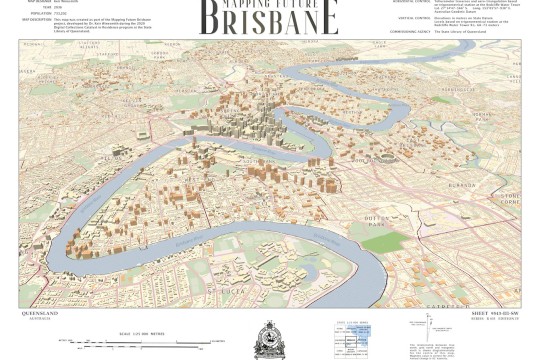
Dr. Keir Winesmith's final presentation - Mapping Future Brisbane: AI and Digital Collections