First Nations material and information accessed on this site may be culturally sensitive for some individuals and communities.
The material displayed contains Aboriginal and Torres Strait Islander content and has been made available in accordance with State Library of Queensland’s Aboriginal and Torres Strait Islander Collections Commitments.
First steps to starting your family history
Work out why you want to know more about your mob, and what you want to find out.
Are you:
- wanting to know more about where your family comes from?
- looking to create a family tree?
- searching for a specific family member?
- writing your life story or that of a parent?
- looking for connection to community, culture and country?
Having a clear idea of what information you are looking for, and why, can help you decide on the best way to find the information.
Use a family tree chart to organise your research
- Record everything you know, and have found out, on family tree charts and/or worksheets (See ‘Hints and tips’ below to find examples).
- Record the information as it appears on the records or as it has been recorded through family stories. This will keep track of different spellings of names.
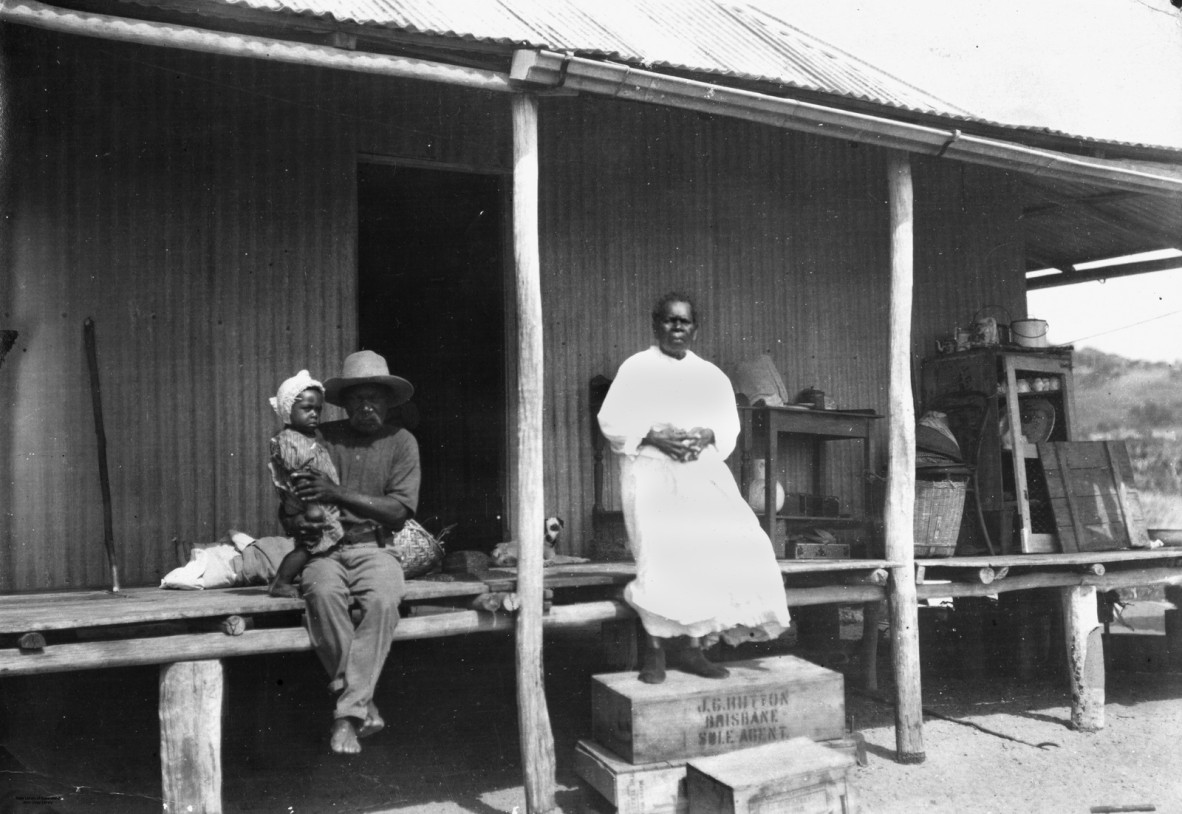
Woman standing and a man holds a child in front of building, North Queensland, ca. 1920, John Oxley Library, State Library of Queensland, Neg. no. 12887
Trace back through your family from yourself
Work back through your family starting with your full birth certificate.
This provides you with information about your parents, including:
- your father's full name, place of birth and occupation at the time
- your mother's maiden name, age and place of birth
- when and where your parents married.
With this information, you can get a copy of your parents' marriage certificate. This will include:
- your parents' full names, ages and birthplaces
- grandfathers' names and occupations
- grandmothers' maiden names.
Then obtain and record the information from your parents' birth certificates. Continue working backwards using available certificates to find more information.
Death certificates may also provide valuable information:
- father's name and occupation
- mother's maiden name and occupation
- deceased person's birthplace
- when the person arrived in Australia from overseas, number of years in the colony and in which Australian colonies.
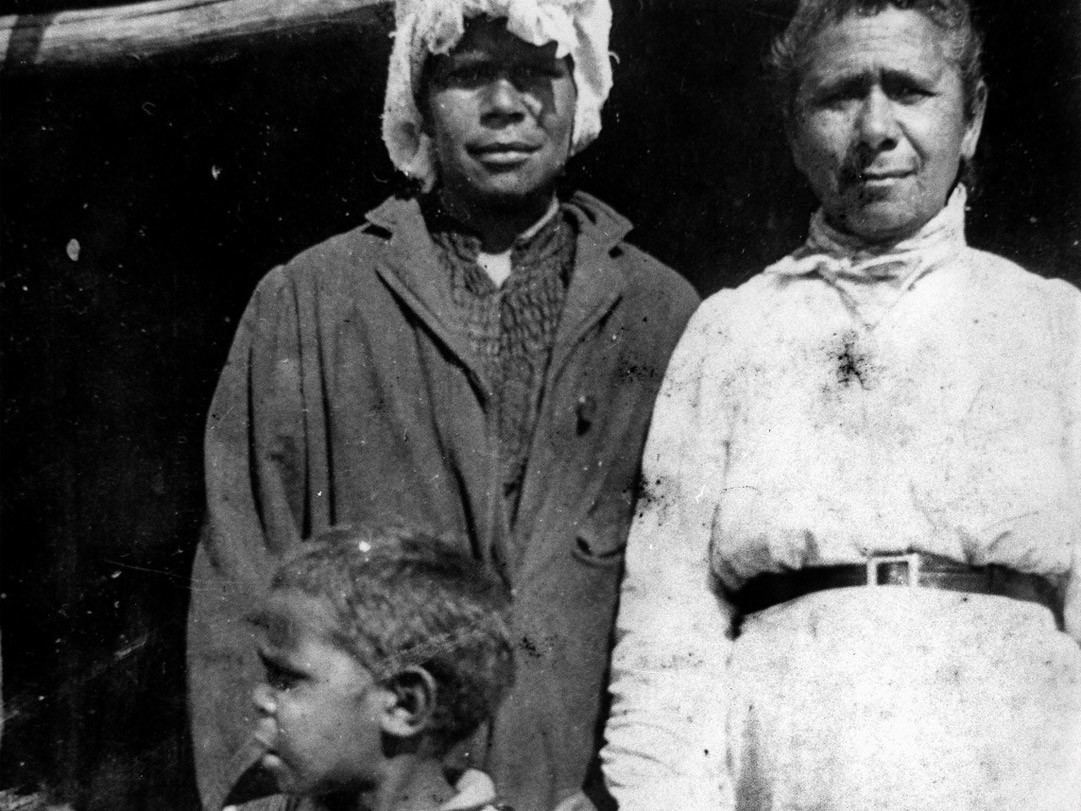
Women and child at Barambah Aboriginal Settlement, ca. 1905, John Oxley Library, State Library of Queensland, Neg. no. 112311
What other information may exist about your family?
Once you have exhausted birth, death, and marriage records, look at other resources such as station/mission records, newspapers, and photographs.
Many references to First Nations peoples are contained in records created by other Queensland Government departments as well as non-government agencies. For example, you may find references to your relatives in:
- Church and mission records
- Defence force records
- Police records
- Pastoral station records
- Tindale Collection of Aboriginal genealogies created in the 1930s
- Margaret Lawrie Collection of Torres Strait Islander genealogies
Hints and tips
- Break your research up into small chunks so it doesn’t feel overwhelming.
- Record information as you go, including where you found the information. Create a research log to keep track of what you have searched and where you have searched. This can be useful to cross-check and pick up errors.
- Make use of worksheets such as family group sheets to record relationships other than the direct line.
- Make use of templates such as AIATSIS Family History worksheets and checklists that includes family trees, State Library of NSW First Nations family history worksheet template or Church of Jesus Christ of Latter-day Saints (LDS) FamilySearch.
- Read how-to guides like Lookin for your mob : a guide to tracing Aboriginal family trees by Diane Smith and Boronia Halstead, and Telling it like it is : a guide to making Aboriginal and Torres Strait Islander history by Penny Taylor.
Find out about the births, deaths and marriages records you can access. Learn how these records can help you chart your family tree.
Discover what other types of records you can use to research your family. Learn how to access these records.
Did you know newspapers can help you learn more about your family? Learn where to access newspapers online and at State Library.