First Nations material and information accessed on this site may be culturally sensitive for some individuals and communities.
The material displayed contains Aboriginal and Torres Strait Islander content and has been made available in accordance with State Library of Queensland’s Aboriginal and Torres Strait Islander Collections Commitments.
Embarking on your family history research
Gather all the information you have. If you can, speak with family members to find out what they know. Bring together copies of any documents, photographs or research that has already been done.
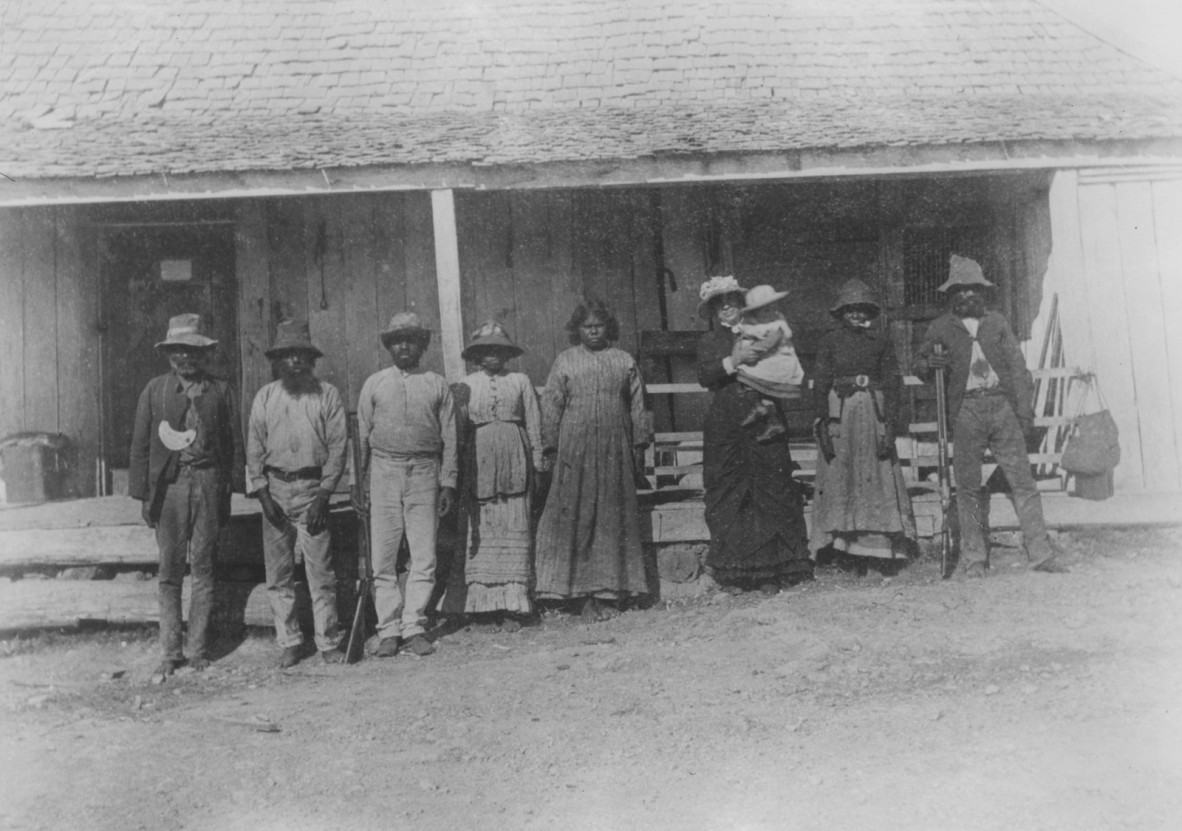
King Billy and group of Aboriginal people at Pikedale, Queensland, date unknown, John Oxley Library, State Library of Queensland, Negative no. 4748
Does your family have a mixed family history?
Family history often involves researching family members who have come from different places. For example, First Nations family history may include:
- people from different parts of Australia,
- different nationalities such as British, European, or Chinese.
This means that there will be many different sources to look at, and various organisations that can help.
Was your family affected by the Queensland ‘Protection’ Acts or other legislation?
Many First Nations peoples came under government control due to legislation such as the Aboriginal Protection and Restriction of the Sale of Opium Act 1897. These laws restricted the lives of Aboriginal people, enabled children to be removed from their families, and created reserves to keep Aboriginal people in restricted areas.
Some were exempted from the Act, so were not subject to the same restrictions. If they were exempted, they were no longer allowed to associate with Aboriginal communities. Finding out if your family were exempted may provide clues about other records to search.
The Aboriginals Protection and Restriction of the Sale of Opium Act 1897 (Qld) created the positions of Protectors of Aboriginals and the Office of the Chief Protector of Aboriginals.
Many government reports created at the time, including the annual reports of the Protectors, provide valuable insights into events and issues of the time. Key pieces of legislation and these reports are available on the AIATSIS website.
The legislation meant the government created many records. If your family was affected by these laws you may find valuable information for your family history research. Due to the personal nature of this information, these files can only be accessed through the Queensland Government’s Community and Personal Histories Team.
What are some of the challenges you may experience?
Family history research can be difficult and frustrating at times with many challenges. These are often more difficult when looking at First Nations family history because:
- Records are often incomplete, inaccurate or have variations in names and spelling.
- Records may have been created by many different organisations including Commonwealth and State governments, and other private organisations, such as churches, missions, or pastoral stations.
- Sometimes records you are looking for don’t exist because they were not created, or they have been lost or destroyed.
Information and stories from your family may help you to work out where to look.
Be aware:
- Some records you find may contain information that is distressing or offensive. Historical records reflect the language and attitudes of the time at which they were made. They may include racist and unpleasant remarks.
- Some records about individuals might contain personal information that is upsetting and could include inaccuracies.
Family history research can be an emotional rollercoaster, so it is always good to have support when you begin your journey.
What do you want to find out? Learn how to organise your material and how to discover more.
Find out about the births, deaths and marriages records you can access. Learn how these records can help you chart your family tree.